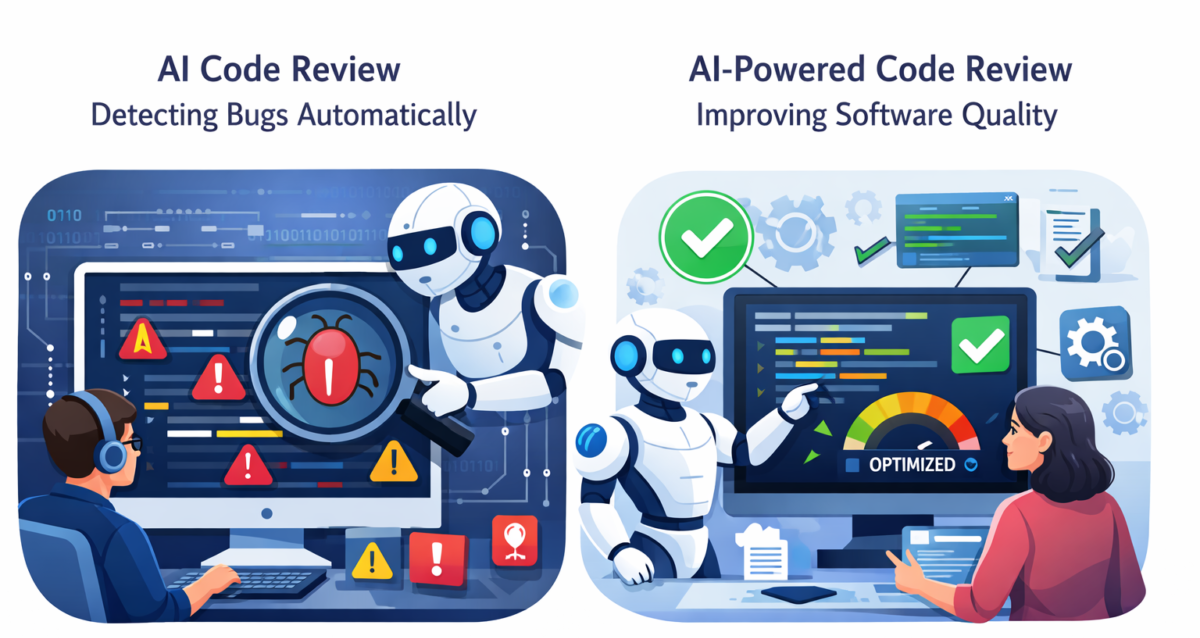
Spec Driven Development with AI Agents: A Guide for Industry Adoption
The way we build software is undergoing a fundamental transformation. As AI agents become increasingly capable of generating production-ready code, a new methodology is emerging at the intersection of traditional specification practices and artificial intelligence: Spec Driven Development (SDD). This approach is redefining how teams conceptualize, build, and maintain software applications in the age of AI-powered development tools.
What is spec driven Development?: Ai Agents
spec driven Development is an evolution of documentation-first engineering practices, adapted specifically for AI-augmented workflows. At its core, SDD treats specifications—whether Product Requirements Documents (PRDs), technical design documents, or API contracts—not merely as reference materials, but as executable instructions for AI agents.
Unlike traditional development where specifications serve human developers as guidelines, SDD positions specifications as the primary interface between human intent and AI implementation. The specification becomes a machine-readable contract that AI agents interpret to generate code, tests, documentation, and deployment configurations.
The methodology draws from established practices like Test-Driven Development (TDD) and Behavior-Driven Development (BDD), but extends them into the realm of AI code generation. Where TDD uses tests to drive implementation, SDD uses comprehensive specifications to drive AI-generated solutions.
The Spec-to-Code Workflow
The SDD workflow represents a paradigm shift from traditional coding practices. Here’s how it typically unfolds:
1. Specification Creation
Product managers, architects, and domain experts collaborate to create detailed specifications. These aren’t the vague, high-level documents of yesteryear. Modern SDD specifications include:
- Functional requirements with explicit acceptance criteria
- User stories with defined personas and scenarios
- Technical constraints including performance benchmarks, security requirements, and integration points
- Data models with field definitions, relationships, and validation rules
- UI/UX specifications with wireframes, design systems, and interaction patterns
- API contracts using OpenAPI/Swagger or GraphQL schemas
2. AI Agent Interpretation
AI agents—whether cloud-based models like Claude, GPT-4, or local models running in AI IDEs—parse these specifications to understand intent. Advanced SDD workflows use structured formats (Markdown with frontmatter, YAML, or JSON) that make specifications more machine-parseable.
3. Code Generation and Implementation
The AI generates code based on the specifications. This isn’t a one-shot process; it involves:
- Scaffolding generation: Creating project structure, dependencies, and boilerplate
- Feature implementation: Building components, API endpoints, and business logic
- Test generation: Creating unit, integration, and E2E tests aligned with acceptance criteria
- Documentation: Generating inline comments, README files, and API documentation
4. Human Review and Refinement
Developers review AI-generated code against specifications, making adjustments as needed. The specification serves as the source of truth for evaluating correctness.
5. Iterative Enhancement
As requirements evolve, teams update specifications first, then prompt AI agents to implement changes. This maintains alignment between documentation and implementation.
Maintaining Applications Through Specifications
One of SDD’s most powerful aspects is how it transforms application maintenance. Traditionally, maintaining codebases involves hunting through files, understanding undocumented decisions, and hoping changes don’t break unknown dependencies. SDD changes this fundamentally:
Bug Fixes
When bugs emerge, the fix begins in the specification. Teams update requirements to clarify edge cases, add missing constraints, or correct misunderstandings. AI agents then regenerate affected code components. This ensures fixes are documented and the specification evolves with the codebase.
Feature Updates
New features start as specification additions. Rather than diving into code, product teams extend PRDs with new requirements. AI agents analyze the existing codebase against updated specs and generate implementation plans. This maintains architectural consistency even as applications grow.
Refactoring
Refactoring becomes specification-driven. Teams update technical specifications to reflect new architectural patterns, and AI agents propagate changes across the codebase. This enables large-scale refactoring that would be prohibitively time-consuming manually.
Legacy Modernization
For existing codebases, reverse-engineering specifications from code (using AI analysis) creates a foundation for SDD adoption. Once specifications exist, teams can modernize incrementally.
Industry Tools Enabling SDD
The SDD ecosystem is rapidly maturing with tools designed to bridge specifications and AI-generated code:
VibeCoding Platforms
Tools like Lovable, Replit, and v0 by Vercel represent the consumer-facing edge of SDD. They allow natural language descriptions to generate working applications. While initially targeting prototypes, these platforms are increasingly capable of production-grade output when fed structured specifications.
AI-Integrated IDEs
Cursor, GitHub Copilot Workspace, and Windsurf embed SDD principles directly into development environments. These tools can:
- Parse specification files in real-time
- Generate code that references specification requirements
- Maintain context across large codebases
- Suggest updates when specifications change
Specification Management Tools
Stoplight, SwaggerHub, and ReadMe provide structured environments for maintaining API specifications that AI agents can consume. These platforms increasingly offer AI integrations that generate implementation stubs, test suites, and SDKs directly from specifications.
Prompt Engineering Frameworks
Tools like LangChain, LlamaIndex, and DSPy help structure specifications for optimal AI interpretation. They enable teams to:
- Break complex specs into AI-digestible chunks
- Maintain conversation context across generation sessions
- Validate AI outputs against specification requirements
Reference Specifications and Frameworks
Successful SDD adoption relies on standardized, structured specification formats:
OpenAPI Specification
The OpenAPI Specification (OAS) is perhaps the most mature example of SDD-ready documentation. Its structured format describing REST APIs is inherently machine-readable, making it ideal for AI-driven development. Tools can generate server stubs, client SDKs, documentation, and tests from OpenAPI definitions.
PRD Templates
Organizations are developing standardized PRD templates optimized for AI consumption. These typically include:
- YAML frontmatter with metadata (status, priority, owner)
- Structured sections for user stories, acceptance criteria, and technical requirements
- Embedded diagrams (Mermaid, PlantUML) that AI can interpret
- Code examples showing expected behavior
Architecture Decision Records (ADRs)
ADRs document significant architectural choices in a structured format. When maintained alongside code, they provide AI agents with context about why certain decisions were made, leading to more coherent generated code.
Design Systems as Code
Modern design systems (like Tailwind UI, Chakra UI, or custom component libraries) are increasingly expressed as structured specifications. AI agents can reference these to generate consistent UIs without explicit styling instructions.
Real-World Use Cases
Organizations across industries are adopting SDD practices:
Enterprise Application Development
A Fortune 500 financial services firm reduced feature development time by 60% by implementing SDD. Product managers write detailed PRDs with acceptance criteria, which AI agents use to generate initial implementations. Developers focus on reviewing, testing, and refining rather than writing boilerplate.
Startup MVPs
Startups are leveraging SDD to launch faster. One SaaS startup used structured specifications to generate their entire MVP—frontend, backend, and database—in two weeks. The specification-first approach ensured the foundation was solid enough to scale.
Legacy System Modernization
A healthcare technology company used AI to reverse-engineer specifications from a 15-year-old codebase, then regenerate it using modern frameworks. The SDD approach ensured no functionality was lost during migration.
API-First Development
API marketplaces and platform companies use SDD to maintain consistency across hundreds of endpoints. OpenAPI specifications serve as the single source of truth, with AI agents generating implementation, documentation, and SDKs in multiple languages.
Benefits of spec driven Development
The advantages of SDD extend beyond faster coding:
Consistency
When AI agents implement from specifications, output remains consistent across the entire application. Coding standards, architectural patterns, and naming conventions are applied uniformly because they originate from a single source.
Maintainability
Specifications serve as living documentation. Because they’re maintained alongside (and before) code, they never become outdated. New team members can understand systems by reading specs, not hunting through source files.
Team Alignment
SDD creates a shared language between product, design, and engineering. Everyone works from the same specifications, reducing miscommunication and ensuring delivered features match intended requirements.
Scalability
As teams grow, SDD enables parallel development. Multiple AI agents can work from the same specification set, generating different components simultaneously while maintaining coherence.
Knowledge Preservation
Specifications capture domain knowledge explicitly. When team members leave, their understanding doesn’t walk out the door—it remains documented and actionable for AI agents and new developers.
Challenges and Best Practices
SDD isn’t without challenges. Organizations adopting this methodology should be aware of:
Specification Quality
AI agents are only as good as the specifications they receive. Vague or incomplete specs lead to incorrect implementations. Invest in specification writing skills and templates.
Over-Specification
Not every detail needs specification. Finding the right level of abstraction—specifying what, not necessarily how—remains an art. Too much detail constrains AI creativity; too little leads to inconsistent results.
Verification Burden
AI-generated code requires thorough review. Teams must develop new skills in evaluating machine-generated implementations against specifications.
Tool Integration
Integrating SDD tools into existing workflows requires effort. CI/CD pipelines, code review processes, and project management tools may need adaptation.
Best Practices for Adoption
- Start with greenfield projects to learn SDD without legacy constraints
- Invest in specification templates that capture your organization’s patterns
- Establish specification review processes as rigorous as code review
- Maintain specification versioning alongside code versioning
- Create feedback loops where implementation insights inform specification improvements
- Train teams on both specification writing and AI prompt engineering
- Use structured formats (YAML, JSON) for machine-readable requirements
The Future of SDD
As AI capabilities advance, spec driven Development will become the dominant paradigm for software engineering. We’re moving toward a future where:
- Natural language specifications translate directly to production systems
- AI agents maintain specifications as living documents, updating them as code evolves
- Specifications become executable contracts that validate implementations automatically
- Cross-functional teams collaborate through shared specification environments
Organizations that adopt SDD now will be positioned to leverage increasingly capable AI agents, while those clinging to traditional code-first approaches will face mounting technical debt and velocity challenges.
The specification is no longer just documentation—it’s becoming the primary artifact of software development. In the age of AI agents, clarity of specification determines quality of implementation. Teams that master the art of precise, comprehensive specification writing will define the next era of software engineering.
Sources and References
- OpenAPI Specification v3.1.0 – OpenAPI Initiative (https://spec.openapis.org/)
- “The Rise of AI-Native Development” – Andreessen Horowitz, 2024
- “Specification-Driven Development: A New Paradigm” – ACM Queue, 2024
- Cursor IDE Documentation – Cursor.sh (https://cursor.sh/)
- GitHub Copilot Workspace Technical Preview – GitHub, 2024
- “PRD Templates for AI Development” – Product Management Institute, 2024
- Architecture Decision Records (ADR) – GitHub ADR Organization
- “VibeCoding: The New Way to Build Software” – Vercel Engineering Blog, 2024
- LangChain Documentation – LangChain AI (https://python.langchain.com/)
- “Test-Driven Development: By Example” – Kent Beck (foundational concepts)
- “Behavior-Driven Development” – Dan North (methodology origins)
- Mermaid.js Documentation – Mermaid (diagramming for specifications)
- “AI-Generated Code: State of the Industry” – Gartner Research, 2024
- SwaggerHub Documentation – SmartBear (https://swagger.io/tools/swaggerhub/)
- “The Future of Software Engineering with AI” – IEEE Software, 2024
Related Articles
Explore more insights on this topic:
- AI Video Generation: A Guide for Content Creators
- AI Voice Cloning: The David Greene Case Explained
- The AI Data Center Storage Crisis Explained
- The Rise of AI Agents: How Autonomous AI Changes Work
- Vibe Coding: The End of Traditional Programming?
References & Further Reading
Deepen your understanding with these authoritative sources: