Passwords have protected digital accounts for decades. However, they are often weak, forgotten, or stolen. Biometric Authentication is now emerging as a safer and easier alternative. It uses unique human traits such as fingerprints or facial recognition to verify identity. In short, biometric authentication can reduce password risks and simplify login experiences worldwide.
From smartphones to banking apps, biometrics are spreading rapidly. People in cities like London, Tokyo, and Mumbai already unlock devices with their faces or fingerprints. Global technology companies are also investing heavily in this security method. The goal is simple: make digital access safer while reducing reliance on traditional passwords.
However, the real question remains. Can biometrics completely replace passwords in the future? To understand this shift, we must explore how biometric technology works and why companies trust it.
At Wire Synapse, we regularly explore technology trends that impact everyday life. From self-improvement to global tech insights, our goal is to explain complex ideas simply. Understanding biometric technology is one such important topic today.
How Does Biometric Authentication Work?
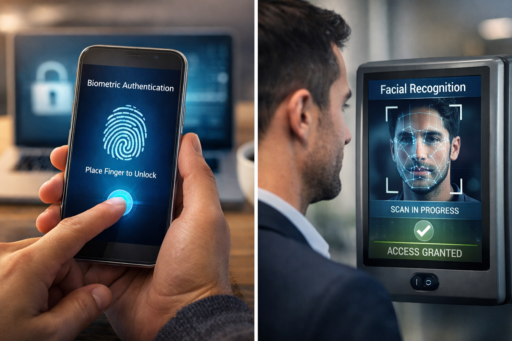
Biometric Authentication verifies identity using physical or behavioral characteristics. These characteristics are unique to each individual. Fingerprints, facial patterns, voice, and iris scans are common examples.
Technology trends often intersect with lifestyle and productivity. For example, digital tools are helping people simplify tasks and work smarter. You can explore this concept further through Strategic laziness. Similarly, artificial intelligence is shaping how security systems evolve today. Learn more about this growing intersection in AI for SEO.
When you enroll in a biometric system, your data is captured and converted into encrypted digital templates. The system stores this template securely on a device or server. During login, it compares your live scan with the stored template.
If the two match, access is granted instantly. This process usually takes less than a second. The convenience explains why biometric technology is spreading worldwide.
Why Is Biometric Security Considered Stronger Than Passwords?
Traditional passwords rely on human memory. Unfortunately, people often reuse or choose weak passwords. Hackers exploit this habit through phishing attacks and data breaches.
Biometric security removes this human weakness. Your fingerprint or facial pattern cannot be guessed easily. It is also extremely difficult to replicate accurately.
Many global organizations now rely on biometrics for secure access. Banks across Asia and Europe already use fingerprint authentication for mobile transactions. Airports worldwide also use facial recognition for passenger verification.
However, biometric systems are not completely foolproof. Security experts still recommend combining biometrics with additional protections.
Why Is Biometric Login Becoming Popular on Smartphones?
Smartphones played a major role in popularizing biometric login. Apple introduced Touch ID in 2013. Soon after, Android manufacturers adopted fingerprint sensors widely.
Today, face recognition systems are common across devices. Users prefer biometrics because they are faster than typing passwords. Unlocking a phone takes less than a second.
The convenience factor matters greatly. Busy professionals, travelers, and students benefit from quick authentication. Global adoption continues to grow as devices become smarter.
In cities like Singapore, New York, and Dubai, mobile payment apps also rely on biometric login. This creates a seamless and secure digital experience.
What Is Biometric Verification and Where Is It Used?
Biometric verification confirms a person’s identity by comparing live biometric data with stored records. Governments and enterprises rely heavily on this process.
Airports now use biometric verification for faster passenger boarding. Immigration systems in many countries scan facial data automatically. This speeds up international travel dramatically.
Financial institutions also use biometric verification for identity confirmation. It reduces fraud during online transactions and account access.
Healthcare organizations benefit as well. Doctors can securely access patient records through biometric systems. This improves efficiency while protecting sensitive data.
What Is Passwordless Authentication and Why Is It Growing?
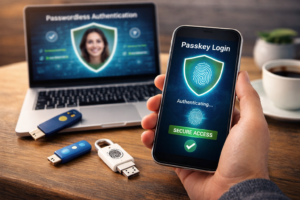
Passwordless authentication eliminates passwords entirely. Instead, it uses biometrics, security keys, or trusted devices to verify users.
Major technology companies are pushing this approach globally. Microsoft, Google, and Apple are investing in passwordless systems. Their goal is to reduce cybercrime caused by stolen passwords.
Cybersecurity reports show alarming statistics. Weak or reused passwords cause many data breaches worldwide. Passwordless systems aim to solve this problem permanently.
People also enjoy the convenience of skipping passwords. Logging into accounts becomes faster and easier. As a result, passwordless technology is gaining popularity worldwide.
How Does Passwordless Login Improve Digital Security?
A passwordless login system removes the need to remember credentials. Users authenticate through biometrics or secure devices.
This approach significantly reduces phishing attacks. Hackers cannot steal a password that does not exist. It also prevents brute-force attacks on login systems.
Organizations around the world are adopting passwordless login models. Financial companies in Europe and North America already deploy them widely. Cloud platforms also support passwordless security frameworks.
Another advantage is improved user experience. Employees and customers log in quickly without frustration.
What Is Passkey Login and Why Is It the Future?
Passkey login is the latest evolution in authentication technology. It combines biometric identity with cryptographic security keys.
When you create a passkey, your device generates two keys. One key stays on your device, while the other is stored on the service server. These keys communicate securely during login.
Your biometric data unlocks the private key stored on your device. This allows authentication without transmitting sensitive information online.
Passkeys are now supported by major platforms worldwide. From Tokyo to Silicon Valley, developers are integrating passkey login systems into websites and apps.
Experts believe passkeys may become the global standard for digital authentication.
Biometric technology will continue evolving rapidly. Artificial intelligence will improve accuracy and fraud detection.
Smart devices, banking apps, and global travel systems will rely more on biometrics. Businesses will invest in passwordless platforms to protect users better.
For individuals, the future will feel more seamless. Logging into accounts will become faster and safer.
At Wire Synapse, we focus on explaining these innovations clearly. Our goal is to help readers understand global technology trends shaping everyday life.
Want more insights on technology, productivity, and lifestyle?
Explore more articles on https://blog.wiresynapse.com/ and discover practical ideas that simplify modern living.