Vibe Coding: The End of Traditional Programming?
Estimated read time: 7 minutes
Learn what vibe coding means, how to thrive as a developer in the AI era, and how non-coders can build apps with AI.
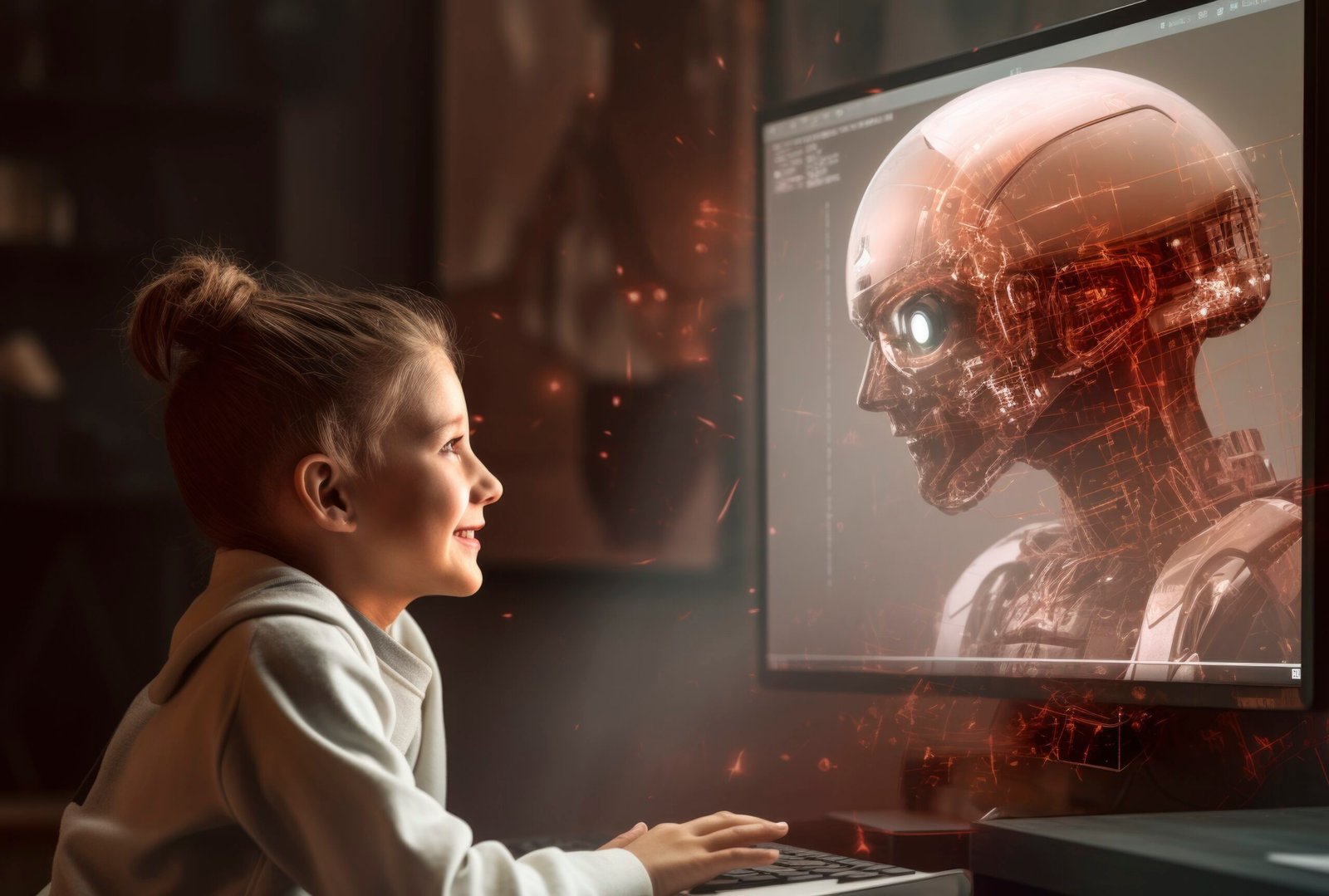
Imagine a future where software engineers spend their days architecting systems and solving problems while AI handles the syntax. This isn’t science fiction—it’s the emerging reality of “vibe coding,” a new paradigm where developers generate and supervise AI-written code rather than typing every line themselves.
The era of painstakingly crafting every semicolon and bracket is giving way to something entirely different. But what exactly is “vibe coding,” and does it spell the end of traditional programming?
What Is Vibe Coding?
The term “vibe coding” emerged from the intersection of AI-powered development tools and a shift in how developers approach their work. At its core, vibe coding means using AI assistants (like GitHub Copilot, Claude, ChatGPT, or Cursor) to generate code through natural language prompts, then refining, reviewing, and orchestrating that code rather than writing it from scratch.
Think of it as the difference between being a craftsman who builds every piece of furniture by hand and being an interior designer who conceives the vision, selects the materials, directs the construction, and ensures the final result matches the intended aesthetic. The craft hasn’t disappeared—it’s evolved.
The phrase captures the essence of this new workflow: developers “vibe” with the AI, describing what they want in plain English, iterating on the output, and maintaining a creative flow state that was previously interrupted by syntax lookups, API documentation diving, and debugging sessions.
How We Got Here
The journey to vibe coding didn’t happen overnight. It’s the culmination of several technological waves:
2021-2022: GitHub Copilot introduced AI pair programming, suggesting code completions in real-time. Developers were skeptical but curious.
2023-2024: Large language models became sophisticated enough to write functional code blocks, explain errors, and refactor existing code. Tools like ChatGPT and Claude became part of many developers’ daily workflows.
2025: AI coding assistants evolved into full-stack collaborators. They could architect entire applications, debug complex issues, and even write comprehensive test suites. The paradigm shifted from “AI helps me code” to “I direct the AI to code.”
The emergence of vibe coding represents a fundamental shift in how software is created, one that many developers have already been experiencing in their daily workflows.
For Developers: Thriving in the Vibe Coding Era
If you’re a software developer watching this transformation unfold, you might feel a mix of excitement and anxiety. Will AI replace you? Should you learn to prompt instead of program? Here’s how to not just survive but thrive:
1. Shift from Syntax to Architecture
The most valuable skill in the vibe coding era isn’t memorizing Python libraries or JavaScript frameworks—it’s architectural thinking. AI can generate code, but it struggles with system design, scalability considerations, security patterns, and long-term maintainability.
Actionable tip: Invest time in learning system design, distributed systems, and software architecture patterns. These high-level skills become more critical when the low-level implementation is automated.
2. Become an AI Orchestrator
The developers who thrive will be those who learn to work with AI most effectively. This means:
- Prompt engineering mastery: Learning to communicate requirements clearly, provide context, and iterate effectively with AI tools
- Code review at scale: Developing the ability to quickly assess AI-generated code for correctness, security, and performance
- Integration expertise: Understanding how to combine AI-generated components into cohesive, production-ready systems
Actionable tip: Practice “prompt-first development”—before writing any code yourself, try describing the entire feature to an AI assistant and see what it produces. Then refine from there.
3. Deepen Domain Expertise
AI can write code, but it lacks deep understanding of business contexts, user needs, and industry-specific challenges. Developers who combine technical skills with domain expertise in healthcare, finance, e-commerce, or other verticals become irreplaceable.
Actionable tip: Choose a domain you’re passionate about and become an expert in both the technical and business aspects of that field.
4. Focus on the Human Elements
Code is ultimately written for humans—other developers who will maintain it, users who will interact with it, and businesses that depend on it. Skills like:
- User experience design
- Technical communication
- Requirements gathering
- Stakeholder management
These human-centric skills become differentiators when the purely technical aspects are increasingly automated.
For Non-Coders: Your Gateway to Tech
Perhaps the most revolutionary aspect of vibe coding is how it democratizes software development. If you’ve ever thought “I have great ideas for apps but can’t code,” this is your moment.
The Barrier to Entry Has Crumbled
Previously, becoming a software developer required years of learning syntax, debugging skills, and framework mastery. While those skills remain valuable, AI now allows motivated individuals to build functional applications with significantly less traditional programming knowledge.
Realistic expectations: You won’t become a senior software architect overnight, but you can build MVPs, automate workflows, and validate business ideas without a computer science degree.
How to Start Building with AI
1. Learn the basics of logic and structure
You don’t need to memorize syntax, but understanding concepts like variables, loops, conditionals, and functions will help you communicate with AI more effectively.
2. Start with no-code/low-code + AI
Tools like Webflow, Bubble, or Zapier combined with AI assistance can help you build sophisticated applications without touching traditional code.
3. Build projects, not tutorials
The best way to learn is by solving real problems. Have an idea for a simple tool? Try building it with AI assistance. You’ll learn more from the mistakes and iterations than from any course.
4. Join communities
Communities like r/vibecoding, Discord servers for AI tools, and GitHub discussions are invaluable for learning how others are approaching AI-assisted development.
5. Learn to read code
Even if you’re not writing code from scratch, you need to understand what the AI generates. Spend time reading and analyzing the output—it will accelerate your learning dramatically.
Addressing the Elephant in the Room: Job Security
Let’s confront the fear many developers have: Will AI take my job?
The honest answer is nuanced. Some coding jobs will indeed be automated, particularly those involving repetitive tasks, boilerplate code, or simple feature implementations. However, history suggests that technological revolutions tend to transform jobs rather than eliminate them entirely.
Consider:
- Automation in manufacturing didn’t eliminate factory work; it changed the nature of the work
- Spreadsheets didn’t eliminate accountants; they made accountants more productive
- The internet didn’t eliminate retail jobs; it created entirely new categories of work
Similarly, vibe coding will likely:
- Reduce demand for junior developers doing simple implementation tasks
- Increase demand for developers who can architect complex systems, work with AI effectively, and bridge technical and business domains
- Create entirely new roles we haven’t imagined yet
The developers most at risk are those who resist the transition. Those who embrace AI as a tool and focus on higher-level skills will find abundant opportunities.
The Future of Programming
Vibe coding doesn’t represent the end of programming—it represents its evolution. Just as high-level programming languages abstracted away assembly code, and just as frameworks abstracted away boilerplate, AI is abstracting away routine implementation details.
What remains constant is the need for human creativity, problem-solving, and judgment. The developer of 2026 and beyond will spend less time wrestling with syntax and more time:
- Understanding complex problems
- Designing elegant solutions
- Ensuring ethical AI implementation
- Collaborating across disciplines
- Maintaining human oversight of automated systems
Conclusion
The rise of vibe coding isn’t a death knell for traditional programming—it’s a wake-up call about how quickly the profession is evolving. Vibe coding isn’t about eliminating developers; it’s about amplifying what developers can accomplish.
Whether you’re a seasoned engineer wondering how to adapt or a complete beginner dreaming of building your first app, the message is the same: embrace the tools, focus on higher-level skills, and remember that technology serves human needs. The best code—whether written by human or AI—is code that solves real problems for real people.
The keyboard isn’t going anywhere, but what we do with it is fundamentally changing. And that might just be the most exciting time to be in tech.
What’s your experience with vibe coding? Are you using AI tools in your development workflow? Share your thoughts in the comments below.
Related Articles
Explore more insights from our blog:
- The Rise of AI Agents: How Autonomous AI Changes Work — Discover how AI agents are transforming the workplace
- Spec-Driven Development with AI Agents — Learn about a new development methodology for the AI era
- AI Video Generation: A Guide for Content Creators — Explore how AI is revolutionizing content creation
- Local LLMs: A Beginner’s Guide to Privacy-First AI — Run AI models locally for enhanced privacy
- Skill Stacking: Combine Micro-Skills for Career Growth — Future-proof your career by combining skills
References & Further Reading
Authoritative sources for deeper exploration:
- GitHub: The Economic Impact of AI-Powered Developer Tools — Research on AI coding tools transforming development productivity
- O’Reilly Radar: AI and the Future of Programming — Expert analysis on AI reshaping programming
- Google Research: ML-Enhanced Code Completion — Academic research on productivity gains from AI-assisted coding